Mannequin Downhill
KAYAC Inc.Racing
4.7672.00 Reviews
- Version
- 0.7.2
- Installs
- 10.00M
- Age Rating
- Teen
Screenshots
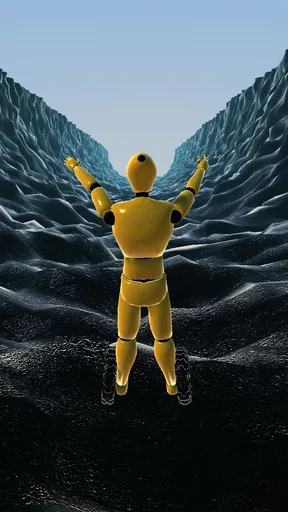
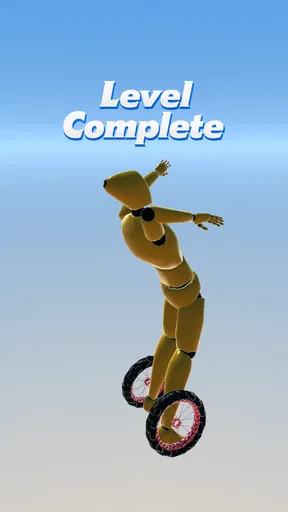
Our Review of Mannequin Downhill
 Analysis by Appyee
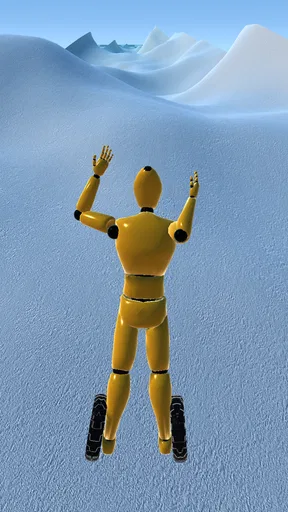
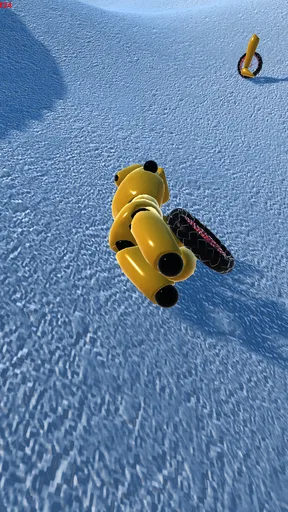
Mannequin Downhill is the kind of racing game I open when I want something quick, unusual, and slightly ridiculous rather than a serious driving simulator. Instead of steering a polished car around a track, I control a mannequin as it tumbles down a hazardous slope. The objective sounds simple, but the challenge comes from making the body move in a way that reaches the bottom without taking too much damage.
That physical premise gives the game its personality. I am not chasing realistic lap times or collecting a garage of vehicles. I am watching posture, momentum, and the shape of the descent, then trying to correct a mistake before the mannequin hits another obstacle. It feels closer to a compact physics puzzle wrapped in a downhill race than to a conventional driving game.
Developed by KAYAC Inc., the game is free to play and aimed at Teen players. It has built a strong audience, with a 4.7 average from around 92 thousand ratings and more than 10 million installs. Those figures make sense after spending time with it: the basic idea is immediately understandable, while the movement takes enough practice to keep short sessions interesting.
How the downhill routine actually works
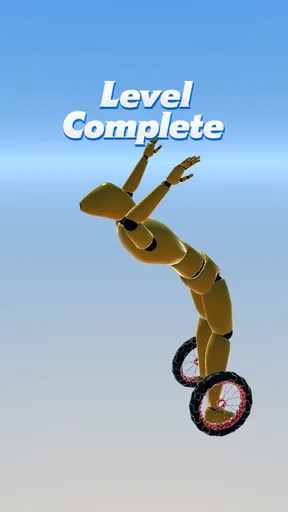
My normal session starts with a simple goal: get the mannequin from the top of the course to the finish in one piece. The controls are not difficult to understand, but the timing matters more than the number of buttons. A small input at the wrong moment can rotate the body into a barrier, while a restrained adjustment can help it slide or roll through the same section safely.
The first few attempts are usually about learning the course rather than winning. I watch where the mannequin loses balance, which obstacles interrupt the descent, and whether a particular landing leaves it ready for the next section. This is important because the game does not reward frantic movement. When I overcorrect, I often create a worse angle than the one I was trying to fix.
My most reliable baseline workflow is to divide each run into small decisions. I look at the immediate slope, choose whether I want the mannequin upright, sideways, or rotating, and then make a short adjustment. Once the body has committed to a movement, I avoid constantly fighting it. That habit makes the controls feel more predictable and reduces the random-looking failures that can happen when I tap repeatedly.
The game is particularly effective in short breaks. A single attempt can be enjoyed without preparing a long strategy, and a failed run usually teaches me something useful about the next one. I can play while waiting for an appointment or during a brief commute, although I prefer a stable connection to the screen and enough attention to react to sudden changes in the course.
One useful everyday scenario is playing with sound turned down while taking a short break at work or school. The visual action communicates most of what I need, and the compact format means I do not have to commit to a long race. I can finish a few attempts, put the phone away, and return later without feeling that I abandoned a complicated campaign.
That convenience also reveals the first limitation. If I want a deep career mode, detailed vehicle tuning, realistic racing lines, or competitive multiplayer, this is not the right choice. The appeal comes from manipulating one awkward body through a downhill route, not from building a long-term motorsport career.
What I watch during a run
I pay attention to the mannequin’s center of mass rather than simply the direction it is facing. A character that looks aligned with the slope may still be carrying rotation that will turn into a bad landing. Conversely, a sideways fall is not automatically a failure if it keeps the body clear of a larger obstacle and preserves forward movement.
I also treat the spaces between obstacles as preparation zones. Experienced play is less about reacting at the exact instant of impact and more about arranging the body before the next hazard arrives. If I wait until the mannequin is already touching a wall, the correction is often too late. A gentle repositioning earlier in the slope gives me more options.
Another practical habit is to stop trying to rescue every imperfect landing. Sometimes the best response is a small correction followed by patience. A tumbling mannequin can recover on its own if I do not add another hurried input. This is one of the game’s less obvious lessons: control is often about removing unnecessary actions, not adding more of them.
Settings and phone habits worth checking
There are no complicated tuning menus that define the experience, so I do not spend time searching for a hidden performance setup. The most useful preparation is practical: I check that the display is comfortable, that touch inputs register cleanly, and that notifications will not cover the screen during a run. Because the action depends on seeing the body’s position, a cluttered or dim display makes precise play harder.
I also recommend testing the game on the phone you intend to use for regular sessions rather than assuming every device will feel identical. The current version is 0.7.2 and supports devices running Android 6.0 or later. On a smaller screen, the action remains readable, but my fingers can cover more of the lower display while I am trying to adjust the mannequin. A larger screen gives me a clearer view of the next obstacle, though it does not remove the need for timing.
There is a trade-off between playing with one hand and using a more secure two-handed grip. One-handed play is convenient when I am standing or holding a bag, but I am more likely to make a broad, imprecise movement. With both hands available, I can keep the phone steady and make more deliberate inputs. For casual attempts, either approach works; for learning a difficult section, stability is worth prioritizing.
I would not treat the settings as a way to make the game automatically easier. The challenge is built around interpreting movement, and changing the presentation cannot replace learning how the mannequin reacts. My best improvement came from reducing distractions and giving myself a clear view, not from expecting a menu option to solve a difficult descent.
It is also worth remembering the Teen content rating before handing the phone to a younger player. The game’s subject is cartoonish and physics-driven, but the rating still matters for families deciding what belongs on a shared device. I would let a child try it only after checking whether the game’s style and store classification fit the household’s rules.
Repeatable patterns that make runs faster
Once I understand a course, I stop treating every attempt as a completely new event. I identify the opening movement, the first dangerous landing, and the point where I need to prepare for the next obstacle. This creates a repeatable route through the level. The advantage is not just speed; it is consistency. A reliable run gives me a better chance of improving one weak section instead of failing somewhere different every time.
My first shortcut is to use the opening seconds as a setup period. Rather than immediately forcing the mannequin into a dramatic rotation, I establish a useful angle and let the slope provide some momentum. This reduces the number of corrections later. It may look slower at the start, but a controlled opening often produces a faster overall descent because I avoid a recovery after the first obstacle.
The second shortcut is to group hazards by the movement they require. If two obstacles can be handled with the same body position, I try to preserve that position instead of resetting between them. This saves inputs and keeps the mannequin’s motion easier to read. When the course demands a new angle, I begin changing position before the first hazard is fully behind me.
The third is to use failed runs as a form of route mapping. After a collision, I ask whether the problem came from entering too quickly, rotating too early, or correcting too late. That question is more useful than simply repeating the same attempt. It turns a frustrating tumble into a specific adjustment for the next run.
I also find it helpful to separate “survival” attempts from “speed” attempts. On a survival run, I choose safe angles and accept a slower descent. On a speed run, I test whether a sharper turn or more aggressive rotation can save time. Mixing both goals at once makes it harder to understand why a run failed. This two-pass method is a small but effective way to practice without wasting attempts.
Another advanced habit is to watch the recovery after a landing, not just the landing itself. The mannequin may touch down safely but continue rotating toward the next barrier. I try to plan the first correction after contact, because the best input is sometimes needed immediately after the apparent danger has passed. This is where the game becomes more demanding than its simple controls suggest.
Compared with ordinary arcade racers, these patterns feel unusual. In a car game, I usually think about braking points, steering lines, and acceleration. Here, I think about body orientation, contact points, and whether momentum is helping or hurting me. Compared with other physics games, the downhill structure gives my experiments a clear direction: I am not merely causing chaos; I am trying to guide that chaos toward a finish.
Where skill stops overcoming the game’s limits
Mannequin Downhill is enjoyable partly because it keeps the rules simple, but that simplicity can also limit long-term depth. I can improve my timing and develop better routes, yet I should not expect the layered progression systems found in larger racing games. There is no reason to choose this over a traditional racer if my main goal is vehicle variety, detailed customization, or a serious sense of competition.
The physics can also make a failure feel less precise than a mistake in a conventional racing game. A tiny change in contact or rotation may produce a noticeably different tumble. That unpredictability is part of the entertainment, but it can frustrate players who want every result to be perfectly repeatable. I enjoy it most when I accept that I am managing momentum rather than issuing exact commands.
Touch control is another boundary. It works well for broad adjustments and quick corrections, but it is not the same as using a physical controller with a precise stick. If I am tired, playing while walking, or holding the phone awkwardly, my inputs become less consistent. For that reason, I would skip it when I want a relaxed game that can be played without looking closely at the screen.
The game is also not ideal for someone who dislikes restarting. Progress in a run depends on getting through a sequence of hazards, so one poor landing can send me back to another attempt. I find the restart loop satisfying when I am in a problem-solving mood, but repetitive when I am looking for a game that steadily rewards me with story, upgrades, or exploration.
Free access makes it easy to try, but “free” does not automatically mean it will suit every player’s expectations. I would recommend it to someone who likes compact physics challenges and playful failure. I would suggest a different racing game to anyone who wants realistic handling, licensed cars, long races, or a strong social competition layer.
Who gets the most from it
The best audience is a player who enjoys learning through repetition. You do not need racing expertise, and the premise is approachable even if you rarely play games in this category. What helps is patience: the controls become more satisfying when you give yourself time to understand how a small adjustment changes the mannequin’s next movement.
It is also a good fit for people who like watching systems behave in unexpected ways. The mannequin’s body creates funny failures, but the humor does not replace the challenge. I often laugh at a bad tumble and then immediately want another attempt because I can see exactly where a better setup might have helped.
Players who prefer fast, low-commitment sessions should find the format comfortable. The game does not require me to remember a large inventory or manage a complicated build before playing. I can pick it up, focus on the next descent, and stop when I am done. That simplicity is a strength, especially on a phone where I want a game that gets to the point quickly.
On the other hand, I would skip it if I need a calm background activity. The screen deserves attention during difficult sections, and casual multitasking leads to avoidable crashes. I would also skip it if I become annoyed by physics that do not behave exactly as expected. The same unpredictability that gives the game character can make it feel unfair to a player who wants strict control.
My verdict after learning its rhythm
The real strength of Mannequin Downhill is the way it turns awkward movement into a skill. The game begins as a novelty, but it becomes more interesting when I stop flailing and start planning each descent. Settings cannot replace practice, shortcuts come from preparation rather than secret commands, and advanced play is mostly about using fewer, better-timed inputs.
Its free price makes trying it an easy decision, and its popularity is understandable. KAYAC Inc. has built a racing experience that feels distinct without needing the usual cars, tracks, or upgrade trees. The Teen rating, broad device support from Android 6.0 onward, and current version 0.7.2 make it accessible to many Android players, while the unusual control concept gives it a clear identity.
I would recommend it to a friend who wants a funny but genuinely demanding mobile game for short sessions. I would explain that the goal is not to dominate a traditional race; it is to learn how a mannequin falls, rolls, catches momentum, and survives the next obstacle. If that sounds entertaining, the game has enough depth to reward repeated attempts.
If you want realistic racing, extensive customization, or perfectly predictable controls, choose a conventional driving game instead. For everyone else, Mannequin Downhill is a clever little physics racer whose best moments come when a run that looked doomed suddenly becomes a clean, controlled descent.
Verdict
Strengths of Mannequin Downhill
- Simple controls make the game easy to pick up quickly.
- Physics-based movement creates funny and unpredictable moments.
- Short downhill runs work well for quick gaming sessions.
- Different obstacles keep the courses from feeling completely repetitive.
- The unusual mannequin theme gives the game a distinctive style.
Limitations of Mannequin Downhill
- Ragdoll physics can sometimes feel inconsistent or frustrating.
- Gameplay may become repetitive after several downhill runs.
- Limited customization reduces long-term personalization options.
- Some levels may rely more on luck than precise player control.
- Ads or in-app purchases may interrupt the overall experience.
Other Releases by KAYAC Inc.
View All
Ball Run 2048: merge number
Casual4.1

Number Master: Run and merge
Action4.4

Type Spin: alphabet run game
Racing4.5

Draw Action: Freestyle Fight
Action4.3
Similar Picks in This Category
View All
Hill Climb Racing
Fingersoft4.3

Dr. Driving
SUD Inc.4.2

Traffic Rider
skgames4.5

Asphalt 8 - Car Racing Game
Gameloft SE4.6

Race Master 3D: Car Racing
Beresnev Games4.6

Extreme Car Driving Simulator
AxesInMotion Racing4.3
Frequently Asked Questions
What is Mannequin Downhill?
Mannequin Downhill is a physics-based mobile game in which you control a mannequin as it tumbles, slides, and crashes down downhill courses. The main appeal is its exaggerated ragdoll movement, unpredictable collisions, and humorous wipeouts. Rather than focusing on realistic racing, the game is built around reaching the bottom while surviving obstacles and enjoying the chaotic results of the mannequin’s movements.
How do you play Mannequin Downhill?
Gameplay is generally easy to understand: guide the mannequin through downhill tracks, adjust its movement when possible, and try to avoid obstacles or dangerous sections. The controls are designed to be accessible, but the physics can make every run feel different. Success depends on timing, positioning, and learning how each slope, ramp, barrier, and landing affects the mannequin’s body.
Is Mannequin Downhill free to download and play?
Mannequin Downhill is typically available as a free mobile download, although the exact monetization model can depend on the version and platform. Free games of this type may include advertising, optional purchases, or unlockable content. Before installing, it is worth checking the store listing for details about ads, in-app purchases, age guidance, and any requirements that could affect your experience.
Does Mannequin Downhill require an internet connection?
The basic downhill gameplay may work without a constant internet connection, which makes Mannequin Downhill suitable for short offline sessions in many situations. However, certain features—such as advertisements, analytics, updates, online rewards, or store-related content—may require connectivity. If offline play is important to you, test the game after installation and review its current store description.
Is Mannequin Downhill suitable for children?
Mannequin Downhill uses cartoon-style ragdoll crashes and exaggerated physical comedy rather than realistic violence, but parents should still check the official age rating before downloading it for a child. The game may also contain advertisements or optional purchases. Younger players might enjoy the simple concept, while parents should review privacy settings, advertising content, and purchase restrictions on the device.
Play our best games!


